
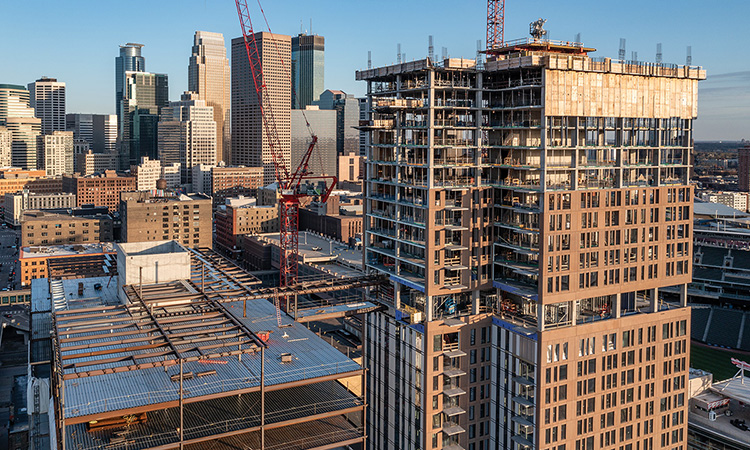
The number of Minnesota building permits is on the rise, but most are for apartments or single-family houses rather than condos. The Twin Cities mainly adds density by using a mixture of methods. Other cities do this with a variety of approaches. It’s a combination of economics and paranoia. Condos carry a variety of risks that local developers are unwilling to take.
In the past five years, there have been several condominium projects that broke ground. Eleven on the River in Minneapolis, with 118 luxurious units, will open its doors in spring 2022. United Properties constructed 33 luxury condominiums at RBC Gateway. Portico at the Falls is a new development in the vicinity of Minnehaha Park that added 24 units. These numbers are small compared to the thousands of new apartment units that have opened across the metro.
In densely populated cities, where single-family houses are prohibitively costly, condominiums are the most common. In the past, The Twin Cities wasn’t a place like that. In previous decades, condos were built for buyers who wanted to live in multiple units but could not afford a single family home.
Article continues after advertisement
Condos are more affordable than houses in other cities. But, with the majority of local housing being multi-unit and prices on the rise, it was assumed that a condo would be a better option. No landlord is responsible for the property, so buyers are free to choose their own fittings, renovate according to taste and not be subjected to rent increases.
Maureen Michalski explains that the local cost of construction of condos limits the market. She is the vice president for real estate development at developer Ryan Companies. The current cost of construction and finishes means that the prices for [condos] must be above $1 million to cover costs.
Financing is another deterrent. Lenders assume that in today’s hot market, the apartment building won’t have any cash flow problems. Bill Katter, who worked for United Properties and Interstate Development in Eden Prairie, Minnesota, said that condo financing is only possible if the units are sold before construction can begin.
Katter says that if, for example, you sell 50% of your condos, then you get a 50% mortgage and if 30% are sold, then a 30% mortgage.
Article continues after advertisement
Developers also cite a state law that allows condo owners to file class-action suits over building defects. Mark Becker, a lawyer at Fabyanske, Westra, Hart & Thomson, says that the law has been clarified in 2017 and includes new language encouraging resolution of disputes. He notes that “a lot of claims were unsuccessful”.
Becker notes that since the clarification came into effect, litigation is largely over. Developers can also protect themselves by purchasing expensive construction insurance. But he admits condo development remains modest. There’s an impression that the 2017 reform is still new and not tested.
Michael Lander of LanderGroup in Minneapolis says that liability concerns are making it hard for developers to find contractors willing to undertake a project. He does, however, predict a rise in the number of people looking to buy condos. Most condo buyers have no children. Lander claims that thirty years ago 75% of families had children, but only a quarter didn’t. This made condos less saleable. This ratio has now flipped.
This data is similar to the state’s building permits. Up until 2018, the majority of Minnesota building permits were issued for single-family houses. Now, the majority of permits are multifamily. In 2023, 18502 permits for multifamily were issued, compared with 13,540 permits for single family.
Lander says that the apartment boom is not for everyone. When people say, “Oh man, this is where I want to live,’ the apartment boom has its limits, says Lander. No. “They [continue] to rent because they have no place to purchase.”